
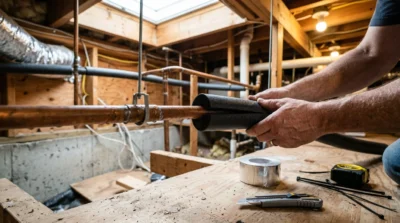
 Proper pipe insulation freeze protection Grand Junction CO homeowners install before late autumn protects vulnerable plumbing lines from freezing and bursting during sudden Mesa County cold snaps. In the Grand Valley, late autumn temperatures often drop quickly once clear high-desert night skies set in, exposing uninsulated pipes to damaging sub-freezing conditions.
Key Questions Answered:
- When do pipes freeze in Grand Junction? Freeze hazards rise sharply in November and December when overnight valley temperatures consistently fall into the teens.
- Which pipes need insulation first? Unheated crawl spaces, exterior-facing walls, attached garages, and outdoor hose bib lines are at the highest risk.
- What is the best immediate freeze defense? Disconnect outdoor garden hoses, close crawl space foundation vents, open vanity cabinets, and let a trickle of water run.
Key Takeaways for Grand Valley Homeowners
- Mesa County overnight temperatures regularly drop into the teens in November and December, creating rapid freeze risks for exposed lines.
- Unconditioned spaces like crawl spaces, garages, and exterior wall cavities lose heat first and require dedicated tubular foam or fiberglass insulation.
- Proactive pipe insulation combined with emergency freeze habits saves thousands of dollars in emergency plumbing repairs and drywall restoration.
The Reality of Winter Freezes Across the Western Slope
Grand Junction sits in a high-desert valley surrounded by the Book Cliffs and Grand Mesa. While daytime highs in October and early November can feel pleasant and mild, clear overnight skies cause radiative cooling that sends temperatures plummeting rapidly after sunset. By late November and throughout December, nighttime lows in Grand Junction frequently settle into the teens, with arctic cold fronts pushing numbers even lower.
Water expands by roughly 9% when it turns to ice. When water trapped inside a rigid copper, galvanized, or PEX pipe freezes, the expanding ice creates immense hydrostatic pressure between the blockage and closed faucets. This pressure causes pipe walls to split along seams or pop loose at elbow fittings. When the ice eventually thaws during the next sunny Grand Junction afternoon, gallons of water pour into walls, flooring, and crawl spaces before anyone notices.
High-Risk Plumbing Zones in Mesa County Homes
Not all residential plumbing lines face equal danger during a Western Slope cold snap. Pipes located within interior, climate-controlled walls rarely freeze if your home heating system is running normally. The real danger zones are unheated, under-insulated, or drafty areas of your property.
1. Unconditioned Crawl Spaces and Basements
Many homes in Grand Junction, Fruita, and Palisade are built over ventilated crawl spaces. During the summer, open vents allow cross-ventilation, but in winter, these same vents channel freezing air directly across main water supply lines and drain pipes running beneath your subfloor.
2. Exterior Wall Cavities and Cantilevers
Plumbing lines routed through exterior-facing walls—especially kitchen sinks, laundry hookups, and upper-story bathroom fixtures—sit only inches away from freezing outside temperatures. If wall cavity insulation has settled or shifted, sub-zero drafts can freeze these supply lines overnight.
3. Attached and Detached Garages
Garages that house water heaters, utility sinks, water softener loops, or overhead plumbing lines rarely have sufficient thermal insulation. Leaving a garage door open for even an hour during a hard freeze can expose unprotected lines to immediate freezing air.
4. Outdoor Hose Bibs and Irrigation Connections
Leaving a garden hose attached to an outdoor spigot traps residual water inside the sillcock valve. When that water freezes, it bursts the valve body inside the wall. Evaporative swamp cooler supply lines and backflow preventers are similarly vulnerable if not fully drained and winterized.
Practical Pipe Insulation Solutions for Colorado Homes
Winterizing plumbing Grand Junction properties require is straightforward when tackled systematically. Applying the correct pipe insulation Colorado home designs need will keep water flowing smoothly all winter long.
| Insulation Material | Best Application Area | Key Advantage |
|---|---|---|
| Pre-Slit Foam Sleeves (Polyethylene) | Straight pipe runs in crawl spaces, garages, and basements | Inexpensive, easy to slip over existing piping, moisture resistant |
| Fiberglass Pipe Wrap with Vapor Barrier | T-joints, valves, elbows, and tight corners | Flexible, high R-value, fits irregular valve shapes |
| Self-Regulating Heat Tape / Cables | High-exposure zones in unheated outbuildings or extreme draft areas | Active electric heating that engages only when temperatures dip below 38°F |
| Insulated Faucet Socks / Hard Shell Covers | Exterior hose bibs and outdoor spigots | Installs in seconds, protects valve stem from wind-driven freeze |
Step-by-Step Pipe Wrapping Process
- Inspect and Clean: Wipe down copper or PEX lines to remove dust, moisture, and corrosion before installing insulation sleeves.
- Fit Foam Sleeves Snugly: Cut pre-slit foam tubes to length using a utility knife. Push the sleeve completely over the pipe, ensuring no bare pipe remains exposed.
- Seal All Seams: Use heavy-duty acrylic tape or UV-resistant cable ties every 12 inches to seal the lengthwise slit and all butt joints between sleeve sections.
- Insulate Fittings and Valves: Wrap elbows, tees, and shut-off valves using flexible fiberglass wrap or mitered foam sections so no metal surfaces contact cold air.
Immediate Action Steps Before a Hard Freeze Hits
- Disconnect Outdoor Hoses: Detach every garden hose from exterior spigots and store them indoors. Install insulated outdoor faucet covers over every hose bib.
- Close Crawl Space Foundation Vents: Insert foam vent plugs or close foundation vent covers to keep icy drafts away from your subfloor plumbing.
- Open Vanity and Sink Cabinets: Open cabinet doors under kitchen and bathroom sinks located along exterior walls to allow warm room air to circulate around plumbing.
- Let Vulnerable Faucets Drip: Allow a slight, steady trickle of cold water from the fixture furthest from your main water supply. Moving water relieves built-up line pressure and prevents standing ice dams.
- Maintain Consistent Indoor Heat: Keep your thermostat set to at least 65°F day and night. Avoid turning heating down drastically overnight during freeze warnings.
Tailored Freeze Protection for Grand Junction Properties
Every home structure presents distinct winterization challenges across Mesa County:
- Historic Valley Homes: Older properties in central Grand Junction often feature uninsulated exterior wall cavities and drafty stone foundations that require thorough crawl space sealing and heat tape application.
- Modern Subdivisions: Newer homes in the Redlands, Fruita, and Clifton frequently have long plumbing runs through unconditioned attic spaces or garage utility bays that benefit from thick foam wrap.
- Rental and Vacation Properties: Unoccupied residences require dedicated winterization protocols, drain-down procedures, and temperature monitoring to prevent silent pipe bursts.
Why Choose Kokopelli Home Services
Kokopelli Home Services delivers reliable home maintenance and handyman solutions throughout Grand Junction, Fruita, Palisade, and surrounding Mesa County communities. Our team knows the local climate patterns, construction styles, and seasonal home vulnerabilities across the Grand Valley. From comprehensive crawl space inspections and professional pipe insulation to complete seasonal winterization, we make sure your home stays safe, dry, and protected against winter’s toughest freezes.
Frequently Asked Questions
At what temperature do pipes freeze in Grand Junction?
Pipes can freeze whenever outdoor temperatures drop below 20°F for several consecutive hours, especially if pipes are located in unheated crawl spaces, exterior walls, or drafty garages.
Is foam pipe insulation enough to stop pipes from freezing?
Foam pipe insulation significantly slows heat loss and prevents freezing during typical overnight drops. In unheated, drafty spaces subject to prolonged sub-zero temperatures, combining foam insulation with air-sealing or thermostatically controlled heat cables provides the most reliable protection.
What should I do if a pipe freezes?
Keep the faucet open, locate your main water shut-off valve in case a burst occurs, and gently warm the frozen section using a hair dryer or space heater. Never use an open flame torch to thaw pipes.
Conclusion
Preventative pipe insulation is one of the most cost-effective investments Grand Junction homeowners can make before winter arrives. Not sure if your pipes are protected? Kokopelli can inspect vulnerable areas and help insulate pipes before the first hard freeze.