
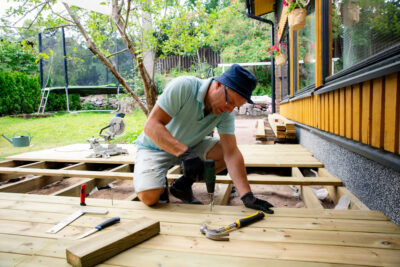
 A deck that looked solid in June can hide real problems by the time fall arrives. Grand Junction’s intense summer sun and sharp temperature swings between day and night dry out wood, loosen fasteners, and stress joints faster than most homeowners expect. Before the weather turns, five specific spots deserve a close look: the ledger board, the boards themselves, the screws and nails holding it together, the railings, and the stair stringers. A little deck inspection maintenance in Grand Junction, CO now saves a much bigger repair bill later.
Why Does a Grand Junction Deck Wear Out Faster Than in Other Climates?
Deck wood in the Grand Valley faces two forces most other regions don’t deal with together. Intense UV exposure breaks down wood fibers and dries out the natural oils that keep boards flexible, while big daily temperature swings, hot afternoons followed by cool desert nights, cause constant expansion and contraction. That combination is what leads to cracked boards, loosened screws, and warped railings well before a deck’s expected lifespan runs out.
Homes in sun exposed areas like Orchard Mesa and parts of Fruita tend to show wear even faster, since afternoon sun hits those decks directly for most of the day. A deck that’s five years old in Grand Junction can show the same stress a ten year old deck might show in a milder climate.
1. Check the Ledger Board Attachment First
The ledger board is the piece that connects your deck directly to your house, and it carries more structural weight than almost any other part of the deck. If this connection fails, the entire deck can pull away from the home, which makes it the single most important thing to inspect.
Look for gaps between the ledger board and the house, rust streaks around the bolts, or soft, spongy wood near the connection point. Any of those signs means water has been getting behind the board, which weakens the wood fibers from the inside even if the surface looks fine. This is a spot where a visual check from a ladder isn’t enough. The bolts need to be physically tested for tightness, and any softness in the wood means the board may need to come off entirely to check the house rim joist behind it.
2. Look Closely for Cracked or Split Boards
Cracking usually starts small, at the ends of boards or around screw holes, and gets worse through repeated freeze and thaw cycles once winter hits. A hairline crack in August can turn into a full split by spring if it’s left alone.
Walk the entire deck surface and press down near any crack you find. If the board flexes or feels soft underfoot, moisture has already gotten into the wood grain. Boards near planters, grills, or areas that don’t dry quickly after rain are the most likely to show this kind of damage first. Replacing a single cracked board now is a straightforward repair. Waiting until spring often means replacing several boards at once, since the surrounding wood tends to fail around the same time.
3. Test Every Screw and Nail for Popped or Loose Fasteners
Fasteners work themselves loose through the same expansion and contraction that stresses the rest of the deck. A screw head sitting slightly above the board surface, sometimes called a popped screw, is one of the clearest warning signs that a deck hasn’t been checked in a while.
Beyond being a trip hazard, a popped fastener means the board underneath is no longer held down evenly, which puts more stress on the fasteners around it. Walking the full deck and pressing on each board while checking for movement takes less than twenty minutes and catches most of these issues before they spread. Older decks throughout Mesa County that were built with standard deck screws rather than coated fasteners tend to show this wear pattern earlier than newer builds.
4. Inspect the Railings for Loose or Weak Connections
A railing inspection means testing for lateral movement, not just checking that the railing looks straight. Grip the top rail with both hands and push firmly side to side and then down. A railing that shifts, wobbles, or feels loose at the base is not doing its job, even if nothing looks visibly wrong from a distance.
Railings fail for a few common reasons: the posts were undersized for the deck height to begin with, the connection to the deck frame has loosened over time, or moisture has weakened the wood where the post meets the frame. Since railings are a code required safety feature and one of the most common causes of deck related injuries when they fail, this is not an area to guess about. If a railing moves more than an inch under firm pressure, it needs attention before anyone leans on it again.
5. Check the Stair Stringers for Rot or Cracks
Stair stringers are the diagonal support boards underneath deck stairs, and they’re easy to overlook because they’re partially hidden. A weak stringer often shows up as a stair that feels slightly bouncy or uneven underfoot rather than anything visible from above.
Check the bottom of each stringer where it meets the ground or a footing, since that’s the spot most exposed to moisture and the first place rot typically starts. Also check the connection at the top where the stringer meets the deck frame. A stringer that’s cracked, split, or soft at either end can fail suddenly under weight, which makes this one of the more serious safety issues on the list despite being one of the least visible.
What Happens If Deck Problems Are Ignored Through Winter?
Winter turns small deck problems into structural ones. Snow load adds weight exactly where fasteners and boards are already weakest, and repeated freeze and thaw cycles force water into every crack, gap, and loose connection that wasn’t caught in the fall. By the time spring arrives, a deck that needed a few fastener replacements in September can need several board replacements or a full railing rebuild.
This is why a pre fall inspection matters more in a climate like Grand Junction’s than in places with milder winters. The freeze and thaw cycle here is aggressive, and decks that go into winter with existing damage rarely come out the other side in the same condition.
Frequently Asked Questions
How often should a deck be inspected in Grand Junction, CO?
A full inspection once a year, ideally in late summer before the weather turns, is enough for most decks. Homes in high sun exposure areas or decks older than ten years benefit from checking twice a year, since UV damage and fastener wear tend to progress faster in those conditions.
Can I repair a cracked deck board myself?
Replacing a single board is a manageable weekend project for a homeowner comfortable with basic tools. If the crack is near the ledger board, a stair stringer, or affects more than one or two boards, it’s worth having someone confirm there isn’t a deeper structural issue before doing the repair.
What is the average cost of deck repair in Mesa County?
Cost depends heavily on what’s being fixed. A few loose fasteners or a single board replacement is a relatively minor repair, while ledger board or stringer issues involve more labor and materials since they affect the deck’s structural support. A quick inspection is usually the fastest way to get an accurate answer for a specific deck.
What are Colorado deck safety requirements for railing height?
Most residential decks in Colorado require railings at a minimum height once the deck surface reaches a certain distance above grade, and Mesa County follows standard building code requirements for this. If a railing was installed years ago or added without a permit, it’s worth confirming it still meets current safety standards.
Is it too late to fix deck problems before winter if summer is almost over?
No. Late summer and early fall are actually the ideal window for deck repairs across the Grand Valley, since the weather is still dry and stable enough for materials to cure properly. Waiting until the first snow makes most repairs harder and some impossible until spring.
The Bottom Line
As part of routine outdoor home maintenance, a Grand Junction deck that gets a real inspection before fall, not just a glance from the yard, has a much better chance of making it through the winter without new damage. The ledger board, boards, fasteners, railings, and stair stringers cover the areas most likely to fail first, and catching a problem in August is almost always cheaper and easier than fixing it in March.
Kokopelli Home Services handles deck repairs and inspections across Mesa County, and getting a visit scheduled before fall is the simplest way to head into winter with a deck that’s actually ready for it. Homeowners in Grand Junction, Fruita, Palisade, and throughout the Redlands can book a deck inspection directly, or request a custom quote for a specific repair already spotted during a walkthrough.