
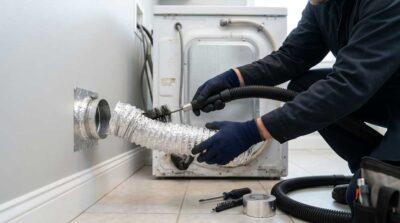
 You should schedule a professional dryer vent cleaning at least once every year to prevent fires and keep your energy bills low, especially in busy households throughout Grand Junction and surrounding Mesa County neighborhoods.
If you have a large family that does more than four loads of laundry a week, or if your dryer line has multiple bends, you need to clean it every six months. Ignoring this maintenance task forces your dryer to run hotter, use more electricity, and slowly destroy its own heating element.
Many homeowners assume that cleaning the small lint trap after every load is enough to keep their appliance safe. This is potentially a dangerous mistake. Up to 30% of fine lint passes right through that mesh screen and settles inside the internal ductwork. Over a few months, this damp material creates a thick, fuzzy lining along the pipe walls. This buildup chokes the exhaust air, trapping heat and moisture inside the machine and creating a major household risk for properties from Fruita to Palisade.
Why Is Lint Buildup Considered a Major Fire Hazard?
Dryer vents filled with lint are a leading cause of residential structural fires because lint is highly flammable and sits directly next to the machine’s heating element. When hot exhaust air cannot escape the pipe, internal temperatures quickly climb past safe limits. If a stray spark or glowing coil touches the trapped, bone-dry lint, the entire ductwork can catch fire in seconds.
The structural danger changes drastically based on the materials hidden inside your walls:
- Plastic Vinyl Hoses: These outdated hoses melt almost instantly when exposed to high heat, allowing flames to escape directly into your home’s framing.
- Flexible Foil Ducts: While slightly safer than plastic, foil sags easily and creates deep pockets where massive amounts of lint collect over time.
- Rigid Metal Pipes: These solid steel or aluminum pipes restrict fire the best, but they will still transfer extreme heat to surrounding wood if packed with burning lint.
Once a fire starts inside a restricted duct, the draft from the dryer fan acts like a blacksmith’s bellows. It pumps fresh oxygen directly into the pipe, fueling the flames and pushing smoke throughout the walls, floor joists, or attic before you notice a problem. Regular maintenance clears out this fuel source so overheating or electrical spark never turns into a devastating house fire in your Mesa County home.
How Does a Clogged Vent Hurt Your Energy Efficiency?
A blocked dryer vent destroys energy efficiency by forcing the appliance to run multiple long cycles just to dry a single load of clothes. When wet air cannot exit the building, it stays trapped inside the dryer drum. Your clothes end up spinning in a humid sauna rather than a stream of dry, hot air. This turns a standard 45-minute chore into a frustrating two-hour process.
Running your appliance twice as long to get dry jeans means your electric or gas meter spins twice as long too. Dryers are already one of the most energy-hungry appliances in any home, second only to air conditioners and water heaters. Doubling their runtime will noticeably inflate your monthly utility bills. Cleaning the dryer vent line restores the correct balance of airflow, dropping your energy consumption back to factory baselines for homes in Grand Junction, Fruita, the Redlands, and beyond.
What Are the Warning Signs of a Clogged Dryer Vent?
The most common signs of a clogged dryer vent include clothes staying damp after a full cycle, a laundry room that feels unusually hot and humid, and a musty smell on your fabrics. You might also notice that the top of the dryer casing feels burning hot to the touch while it runs. Finally, if the exterior vent flap outside your home stays closed or barely flutters when the machine is on, air is not escaping.
Insider Airflow Test: Turn your dryer on high heat while empty. Walk outside to where the pipe exits your home. Hold a standard plastic grocery bag or lightweight piece of paper a few inches away from the opening. A clean, healthy system will blow the bag out straight at a sharp angle. If the bag barely moves or sags downward, you have a dangerous restriction inside the line.
To avoid costly surprises, watch for these specific performance changes during the week:
- The Two-Cycle Rule: If thin t-shirts or light bed sheets require a second cycle to dry completely, your airflow is compromised.
- Hot Metal Components: If the metal zippers, buttons, or snaps on your freshly dried clothes are too hot to touch comfortably, heat is being trapped inside the drum.
- Excessive Lint Accumulation: Finding large amounts of loose debris on the floor behind or underneath the machine means pressure is forcing lint out of the connection seams.
- Musty Odors: A distinct smell of damp mildew on clothes immediately after a cycle indicates that stagnant, humid air is failing to exit the machine.
How Does Airflow Restriction Damage Your Appliance?
Restricted airflow damages your dryer by overheating its internal electrical components, which triggers premature breakdowns and expensive repair bills. Dryers rely on a continuous stream of moving air to pull heat away from the heating element or gas burner. When that air stops moving, the temperature inside the cabinet spikes, causing critical safety parts to fail.
When a dryer is forced to work against a heavy lint blockage, several costly mechanical issues happen simultaneously:
- Blown Thermal Fuses: This small safety switch is designed to cut all power to the machine if things get dangerously hot. Once it trips, the dryer will refuse to heat up or turn on at all, requiring a service call.
- Burned-Out Heating Elements: If the safety fuse fails to trip, the main heating coils will glow red-hot until they literally snap under the thermal stress, costing hundreds of dollars to replace.
- Warped Drum Rollers: The extreme ambient heat inside the cabinet warps the plastic roller wheels that support the heavy spinning metal drum, leading to loud squeaking, thumping, and rattling noises.
- Fried Main Control Boards: Modern smart dryers rely on delicate computer chips to regulate cycles. Overheating the cabinet can melt the solder joints on these circuit boards, instantly ruining the appliance.
What Factors Determine Your Cleaning Schedule?
 The factors that dictate how often you need to clean your dryer vent include the total length of the pipe, the number of ninety-degree bends, and your household size. A short, straight pipe that shoots directly out of an exterior wall stays clean much longer than a complicated line. If your vent travels up through an interior wall and exits through a roof cap, it will accumulate lint much faster.
Consider how these specific lifestyle and structural elements affect your home’s maintenance timeline:
- Pet Ownership: Long-haired dogs and cats shed dander and fur that bypasses the lint screen easily. This heavy hair binds the loose lint together inside the pipe, speeding up the clogging process.
- Commercial or Heavy Hobbies: If you run a home business, wash oily work uniforms, or dry heavy quilts and towels frequently, your lint production doubles.
- Ductwork Geometry: Every single 90-degree elbow joint in your vent pipe reduces air velocity by roughly 10 feet per minute. Slower air lacks the strength and velocity to carry heavy, damp lint out of the building.
- Roof Vent Transitions: Vents that exit through the roof must fight gravity. Lint must travel straight up against its own weight, causing it to fall back down and collect at the base of the vertical pipe.
If your laundry setup requires a long, winding path to reach the outside air, you cannot afford to wait a full year between cleanings. Gravity and friction work against your machine every day, causing heavy particles to drop out of the air stream and stack up in the lowest corners of the line. This is especially true for multi-story homes in areas like the Redlands or hillside neighborhoods near Palisade, where vent runs are often longer and more complex.
The Environmental and Financial Impact of Neglect
Neglecting your dryer vent creates a hidden drain on both your household finances and the environment. Because clothes dryers are completely open-loop systems that draw in room air, heat it up, and dump it outside, their efficiency relies entirely on speed. A restricted pipe extends the time your home’s heating or cooling system must work to replace that lost indoor air.
When you invest in routine cleaning, you achieve several immediate benefits:
- Lower Carbon Footprint: Decreasing your appliance’s monthly runtime directly lowers your household’s overall carbon footprint and greenhouse gas output.
- Reduced Wardrobe Wear: The friction and high heat of multi-cycle drying breaks down the elastic fibers in your clothes, causing them to shrink, fade, and thin out prematurely.
- Fewer Emergency Repairs: Eliminating the thermal strain on internal fuses and sensors means you avoid the frustration of sudden appliance breakdowns on busy weekends.
Frequently Asked Questions
How do I know if my dryer vent is blocked?
Your clothes will take two or three cycles to dry completely instead of just one. The machine will also feel incredibly hot to the touch, and your laundry room might smell like burnt dust or mildew.
Can a clogged dryer vent cause a carbon monoxide leak?
Yes, if you own a gas-powered dryer, a completely blocked exhaust pipe can force deadly carbon monoxide gas back into your living space. A clear line ensures these toxic fumes are safely pushed outside.
Will regular cleaning make my dryer last longer?
Yes, keeping the line clean prevents the motor and heating element from running too hot. This reduces mechanical wear and tear, adding years to the overall lifespan of your appliance.
Do I need professional cleaning if I live in a newer home?
Absolutely. Many newer homes in Grand Junction and other fast-growing parts of Mesa County have longer vent runs that snake through interior walls, which can actually trap lint faster than older, shorter installations.
How often should I schedule service?
Most households should schedule a professional cleaning at least once per year, and every six months for larger families or heavy laundry use. If you notice any warning signs in between visits, schedule service right away rather than waiting for your regular appointment.
Contact Kokopelli Home Services today to schedule your comprehensive dryer vent cleaning. Our experienced team uses advanced tools to clear out hidden lint blocks, restore safe airflow, and ensure your laundry system operates at peak efficiency in homes across Grand Junction, Fruita, Palisade, the Redlands, and the rest of Mesa County.