
Checking your ceiling fans in June keeps your home cool during the hottest days of the summer and lowers your energy bills, especially in Grand Junction and throughout Mesa County. When fans run constantly to beat the desert heat, their components experience physical wear that reduces overall cooling performance. Evaluating these fixtures early in the season stops minor mechanical issues from turning into complete motor failures.
Many homeowners do not think about their ceiling fans until a loud wobble or a burning smell interrupts their afternoon. Constant use causes mounting brackets to loosen, which creates safety hazards above your living space. A quick check allows you to spot these problems early, keeping your air circulating cleanly and safely when temperatures peak.
Are Your Ceiling Fan Blades Rotating in the Correct Direction?
Setting your fan blades to spin counterclockwise creates a direct downdraft that produces a noticeable cooling effect on your skin. This simple adjustment allows you to raise your thermostat setting by several degrees without sacrificing personal comfort.
Many people do not realize that ceiling fans feature a small directional switch on the motor housing. During the winter, your fan should spin clockwise at a low speed to pull cool air upward and push trapped warm air down into the living zone. When summer arrives, this setting must be reversed. A counterclockwise rotation pushes air straight down, creating a wind-chill effect that makes a room feel up to four degrees cooler than the actual ambient air temperature.
If you leave your fan running in the winter setting during July, you are actively pushing hot air down into your living space. This mistake forces your primary cooling system to run longer cycles, driving up your monthly power bills. Checking the direction of every fan in your home takes less than a minute but provides immediate relief from the midday sun.
How Does Dust Accumulation Impact Your Indoor Air Quality?
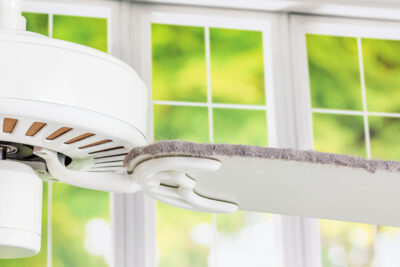
Thick dust buildup on top of fan blades unbalances the fixture and spreads allergens across your living areas every time you turn the motor on. Cleaning these surfaces regularly protects your indoor air quality and stops electric motors from overheating under extra physical weight.
The Hidden Risks of Dusty Fan Blades
- Allergen Distribution: Spinning blades throw trapped dust mites, pet dander, and outdoor pollen directly into your breathing zones, triggering seasonal allergies.
- Motor Strain: A heavy layer of dirt acts as an insulating blanket over the motor casing, trapping heat and shortening the lifespan of the appliance.
- Wobble Development: Even slight variations in weight distribution across the blades cause the entire assembly to shake, damaging the internal bearings.
Why Do Ceiling Fans Begin to Wobble and Shake Over Time?
Ceiling fan wobbles happen when mounting screws loosen, blades warp, or factory balance clips shift out of alignment during heavy operational cycles. Fixing a shaking fixture prevents the entire unit from breaking loose from the electrical box and falling into your room.
Every time a fan spins, it generates subtle vibrations that travel up the downrod into your ceiling framing. Over months of constant summer operation, these vibrations back out the small screws holding the blades to the iron arms. If one blade sits even a fraction of an inch lower than the others, the uneven aerodynamic drag creates an unsightly and dangerous shake.
Warped blades are another common culprit in humid areas or homes without consistent climate control. If a blade absorbs moisture, its weight changes, ruining the factory balance. A professional technician uses precision balancing kits to measure individual blade weights, quickly correcting alignment errors to ensure quiet, stable operation through the summer.
Is an Outdated Fan Bracket Creating a Hidden Safety Hazard?
Older homes often feature standard plastic electrical boxes that cannot support the heavy physical weight and movement of a modern ceiling fan. Upgrading to a dedicated, rated metal brace keeps your heavy fixtures anchored securely inside your ceiling framing.
A standard electrical box is designed to hold a lightweight light fixture weighing less than ten pounds. A typical ceiling fan weighs between fifteen and thirty pounds, and that weight multiplies significantly once the motor begins to spin. If a previous owner attached a fan to a standard light box, the plastic threads can shear off without warning, causing the heavy fixture to crash down.
A proper installation requires a heavy-duty metal fan brace that expands outward until it locks tightly between two ceiling joists. This structural brace handles both the static weight of the fixture and the dynamic forces generated by spinning blades. Verifying your ceiling mounts ensures your family stays safe from sudden structural failures, whether you live in Fruita, Palisade, or an older home in the Redlands.
What Causes Strange Humming Noises in Your Electrical Fixtures?
Loud humming or buzzing noises usually point to cheap light dimmer switches, loose internal housing screws, or failing motor capacitors inside your fan assembly. Identifying the source of these noises prevents electrical shorts and keeps your home peaceful during quiet evening hours.
Many homeowners try to control their fan speeds using a standard wall dimmer switch designed for dining room lights. This setup starves the fan motor of proper voltage, causing the internal coils to vibrate loudly and overheat. Fans require specialized solid-state speed controls that deliver smooth power without damaging the motor windings.
Inside the fan itself, loose canopy screws can rattle against the metal housing, creating an annoying rhythmic buzz. If the noise persists across all speeds, the internal capacitor might be losing its ability to store electrical energy. Replacing these small components restores silent operation, allowing you to enjoy cool air without a constant background racket.
How Can Smart Fan Upgrades Lower Your Summer Energy Costs?
Smart ceiling fans use advanced motion sensors and programmable schedules to turn off automatically when rooms are empty, preventing unnecessary power waste. Integrating these fixtures with your central thermostat improves air circulation and lowers your overall carbon footprint.
Ceiling fans cool people, not rooms. They work by moving air across your skin to speed up natural evaporation, meaning a fan running in an empty bedroom wastes electricity without lowering the actual room temperature. Smart home switches solve this problem by detecting when a room is vacant, cutting power to the fixture until you return.
You can also program smart fans to sync directly with your air conditioning system. When the central air turns on, the fans spin up to distribute the chilled air evenly across your home, breaking up hot spots in distant corners. This cooperative approach allows your home to maintain a steady temperature using less total energy.
Are Integrated LED Light Kits Worth the Investment Today?
Upgrading to an integrated LED light kit eliminates the need for frequent bulb replacements and reduces the amount of ambient heat generated by your ceiling fixtures. These modern arrays use a fraction of the energy required by older incandescent or halogen bulbs.
Traditional bulbs act like small space heaters, converting up to ninety percent of their electrical energy into ambient heat rather than visible light. Hanging multiple incandescent bulbs directly beneath your ceiling fan warms the very air the fixture is trying to circulate. This heat output actively fights against your air conditioning system, raising indoor temperatures.
Integrated LED kits emit almost no radiant heat and last for decades before needing attention. They mount flush to the bottom of the motor housing, creating a clean look that complements modern interior designs. Making this switch keeps your utility bills low and prevents you from having to climb ladders to change dead bulbs during the hottest weeks of the year.
Frequently Asked Questions
Is It Safe to Leave a Ceiling Fan Running Twenty-Four Hours a Day?
While modern fan motors are built to handle long operational cycles, leaving them running constantly in empty rooms wastes electricity and wears out the internal bearings prematurely. It is best to turn off your fans when you leave the house to save energy and protect the motor from overheating.
Why Does My Ceiling Fan Click Whenever I Change the Speed?
Clicking noises usually indicate that a blade screw is loose or that the pull chain is swinging against the glass light globes. Tightening all hardware connections along the blade arms and securing the chains usually stops the noise immediately.
Can Any Handyman Install a Heavy-Duty Ceiling Fan Brace?
Yes, a skilled technician can install an expandable remodel brace directly through the existing ceiling hole without cutting out large sections of drywall. This process secures the fixture to the surrounding structural framing without requiring extensive ceiling repairs afterward.
How Often Should I Lubricate My Ceiling Fan Motor?
Most modern ceiling fans feature permanently lubricated, sealed bearings that never require additional oiling. Older vintage models may have a small oil hole near the top of the motor housing that requires a few drops of non-detergent sewing machine oil once a year.
Secure Your Home Comfort
Kokopelli Home Services provides expert fixture troubleshooting, secure bracket installations, and comprehensive property maintenance throughout Grand Junction and the surrounding Mesa County area. We work hard to maintain your interior systems so you can stay cool and comfortable all summer long. Contact us today to organize your seasonal repair list and update your home fixtures. Our team handles every repair with care to ensure long-term structural reliability for homeowners across Fruita, Palisade, and the Redlands.